

.png?width=200&height=148&name=Menu%20C%20(2).png)
.png?width=307&height=228&name=Menu%20-%20D%20(1).png)





.png)


The WELL Operations Rating was officially launched on January 29, 2026, by the International WELL Building Institute (IWBI).
This new rating enables real estate investment trusts (REITs), funds, and asset managers to optimize their base building operations and management to support occupant health and well-being.
By focusing on operational excellence and daily facilities management, organizations can drive long-term asset value and satisfy the rising demands of both investors and tenants.
What Is the WELL Operations Rating?
The WELL Operations Rating is a targeted achievement within the WELL ecosystem that focuses specifically on the operation and management of base buildings.
Similar to other WELL ratings, which concentrate on a subset of strategies from the full WELL v2 certification, the WELL Operations Rating is designed to validate that a building's operational protocols, from HVAC maintenance to emergency readiness, meet WELL’s rigorous standards for human health and well-being.
Who Is the WELL Operations Rating For?
This rating is intentionally curated for the leaders who manage real estate assets at scale:
- Real Estate Investment Trusts (REITs): The rating provides REITs with a framework for gathering verified operational data to support GRESB reporting and investor relations, proving a dedicated focus on the "Social" aspect of ESG.
- Large-scale developers: For those overseeing stabilized assets or recent completions, the rating offers a structured way to institutionalize health-focused management protocols. This ensures that the high standards set during design are maintained through daily operations.
- Real estate companies and funds managing multiple assets: These organizations can leverage the rating to standardize healthy building maintenance across their entire portfolio, establishing a consistent "people-first foundation" that increases confidence among both occupants and stakeholders.
How Is the WELL Operations Rating Different From Other WELL Ratings?
While all WELL ratings share a similar framework, the WELL Operations Rating is distinguished by its specific focus on management and policy rather than physical infrastructure alone.
|
Rating |
Primary Focus |
Key Areas Covered |
|
(NEW) WELL Operations Rating |
Base Building Operations & Management |
HVAC maintenance, IEQ excellence, resilience policies, and tenant engagement. |
|
(NEW) WELL Real Estate Rating |
Base Building Infrastructure |
Air supply treatment, water quality validation, sound isolation, and building material safety. |
|
Data-Driven Outcomes |
On-site testing and sensor data for air, water, light, and thermal comfort. |
|
|
Health, Safety & Resilience |
Cleaning protocols, emergency preparedness, and management policies for air and water quality. |
|
|
Diversity & Inclusion |
Equitable access, inclusive design, and organizational policies for marginalized groups. |
What Are the Key Areas of Focus for the WELL Operations Rating?
The WELL Operations Rating centers on four primary pillars that define “operational excellence”:
- Building Systems MaintenanceAdvanced protocols for HVAC performance, water safety, and structural moisture control.
- IEQ Operational ExcellenceMaintaining high standards for air ventilation, flow, and acoustic performance.
- Policies for Resilience and ReadinessEstablishing emergency response plans and supply chain labor governance to prepare for future disruptions.
- Enhanced Tenant EngagementPromoting health, well-being, and movement-based design to improve occupant satisfaction and performance.
What Are the Indoor Air Quality Requirements in the WELL Operations Rating?
Just like other WELL ratings and the WELL v2 certification, the WELL Operations Rating focuses on indoor air quality (IAQ) as a key strategy for protecting occupant health.
While the WELL Real Estate Rating (co-released with the WELL Operations Rating) emphasizes the physical infrastructure of the base building, the WELL Operations Rating shifts the focus toward how building systems are managed and maintained daily to maintain optimal IAQ.
This includes performing rigorous HVAC and building systems maintenance, implementing operational protocols that prioritize high ventilation and air flow, and establishing data-driven monitoring and resilience policies to ensure healthy air is consistently delivered across the portfolio.
How Kaiterra Helps Achieve the WELL Operations Rating
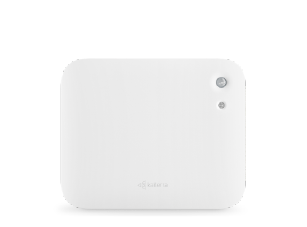
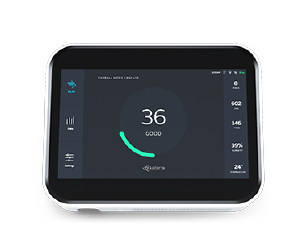
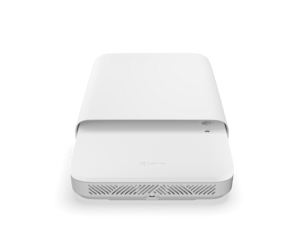
Kaiterra’s continuous IAQ monitoring solutions are specifically designed to meet WELL’s IAQ requirements and help projects maximize points with continuous monitoring data. All Kaiterra solutions are part of the Works with WELL (WWW) catalog, indicating that their hardware specifications, capabilities, and insights are fully aligned with specific WELL strategies.
By partnering with Kaiterra for the WELL Operations Rating, projects unlock:
- Meet air quality requirements: Kaiterra monitors are purpose-built to meet WELL’s requirements for IAQ, measuring parameters like PM2.5, PM10, TVOC, CO2, CO, and ozone to help projects demonstrate ongoing compliance with the rigorous HVAC performance, air ventilation, and air flow standards.
- Intelligent portfolio visibility: The Kaiterra Data Platform instantly turns complex, portfolio-wide IAQ data into intuitive, digestible, and action-ready insights. This allows asset managers to benchmark performance across all locations, identify underperforming buildings for immediate intervention, and provide transparent health data to tenants and investors to prove a commitment to indoor environmental quality in real-time.
- Reduced costs and workload: Continuous monitoring replaces the cost- and time-intensive process of manual on-site testing. By automating data collection, documentation, and analysis, Kaiterra significantly lowers the ongoing cost of maintaining your rating while freeing up your facilities team to focus on high-value tasks.
Want to learn more? Reach out to a WELL AP on the Kaiterra team today to find out how our solutions make it easy to meet the IAQ requirements in the new rating.