


.png?width=200&height=148&name=Menu%20C%20(2).png)
.png?width=307&height=228&name=Menu%20-%20D%20(1).png)





.png)



On January 29, 2026, the International WELL Building Institute (IWBI) released two new WELL ratings that are officially open for enrollment.
The first is the WELL Real Estate Rating, a specialized achievement that allows real estate organizations to enhance base building infrastructure and instill confidence in tenants and visitors by demonstrating that the base building meets rigorous standards for health and well-being.
What Is the WELL Real Estate Rating?
Just like other WELL ratings, the WELL Real Estate Rating is a targeted protocol focused on a specific theme - in this case, base building infrastructure.
While WELL v2 certification is a comprehensive process that requires meeting a wide range of preconditions and optimizations across 10 concepts, ratings are more flexible, "WELL-lite" frameworks. They allow owners to achieve high-impact milestones with limited capital expenditure, serving as either a standalone mark of leadership or a stepping stone toward full certification.
The WELL Real Estate Rating specifically validates that a property’s core systems meet stringent, evidence-based standards for human health, providing a roadmap for real estate leaders to quantify and expand social sustainability efforts throughout their property holdings.
Who Is the WELL Real Estate Rating For?
This rating was specifically designed for the unique needs of large-scale real estate entities, including:
- Real Estate Investment Trusts (REITs). For REITs, the rating provides standardized, validated ESG data that can be referenced in GRESB submissions and investor communications to demonstrate commitment to social sustainability.
- Large-scale developers. For developers, the rating offers a practical pathway to measure and validate health strategies early in an asset’s lifecycle, helping them attract top-tier tenants from day one.
- Real estate companies and funds managing multiple assets. These organizations can use the rating to efficiently scale health strategies across a global portfolio, providing a verified "people-first foundation" that builds trust with both residents and investors.
How Is the WELL Real Estate Rating Different From Other WELL Ratings?
While other WELL ratings focus on operations or specific populations, the WELL Real Estate Rating is uniquely focused on the physical infrastructure of the base building.
|
Rating |
Primary Focus |
Key Areas Covered |
|
(NEW) WELL Real Estate Rating |
Base Building Infrastructure |
Air supply treatment, water quality validation, sound isolation, and building material safety. |
|
(NEW) WELL Operations Rating |
Base Building Operations & Management |
HVAC maintenance, IEQ excellence, resilience policies, and tenant engagement. |
|
Data-Driven Outcomes |
On-site testing and sensor data for air, water, light, and thermal comfort. |
|
|
Health, Safety & Resilience |
Cleaning protocols, emergency preparedness, and management policies for air and water quality. |
|
|
Diversity & Inclusion |
Equitable access, inclusive design, and organizational policies for marginalized groups. |
What Are the Features in the WELL Real Estate Rating?
This rating introduces several high-impact strategies tailored for investors and tenants:
- Indoor Environmental Quality (IEQ) Validates air supply and exhaust treatment, water quality, sound isolation, and thermal comfort.
- Asset and Community Resiliency Focuses on emergency preparedness, carbon disclosure, and moisture mitigation.
- Responsible Material Selection Addresses building product ingredients, supply chain labor practices, and hazardous material remediation.
- Enhanced Occupant Experience Encourages movement-based design, restorative spaces, access to nature (biophilia), and inclusive design.
The Role of Indoor Air Quality in the WELL Real Estate Rating
Indoor air quality (IAQ) is a core pillar of IEQ, one of the key strategies in the new rating. The focus on IAQ is specifically found in the rating’s requirements for maintaining a healthy air supply and advanced exhaust treatment.
By ensuring the base building infrastructure is designed to consistently deliver clean air to occupants, owners can justify premium rental rates and attract Class-A tenants who are increasingly prioritizing health-centered spaces.
How Kaiterra Helps Achieve the WELL Real Estate Rating
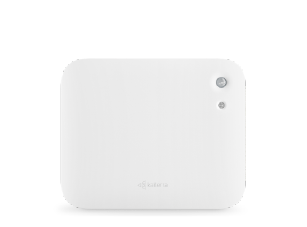
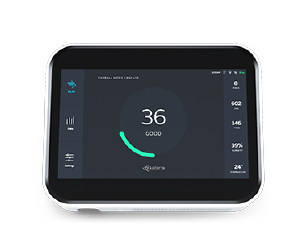
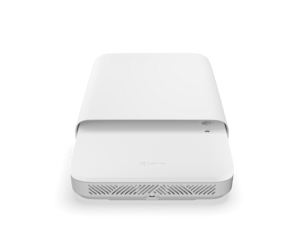
Kaiterra’s continuous IAQ monitoring solutions are purpose-built to help WELL projects meet IAQ requirements and maximize points for continuous monitoring. Our solutions are part of the official Works with WELL (WWW) catalog, meaning their technical specifications, capabilities, and insights are directly aligned with specific WELL strategies.
Here’s how Kaiterra can help you optimize your WELL Real Estate Rating project:
- Meet air quality requirements: Kaiterra monitors are designed with WELL standards in mind, measuring parameters like PM2.5, PM10, TVOC, CO2, CO, and ozone to help projects validate and optimize air quality in real time.
- Intelligent portfolio visibility: The Kaiterra Data Platform instantly analyzes and interprets complex IAQ data across large portfolios, providing corrective actions and recommended optimizations. By translating raw air quality data into action-ready insights, the platform helps protect asset value by identifying infrastructure risks early and verifying a building’s health credentials in real-time.
- Reduced costs and workload: Continuous monitoring replaces the expensive and labor-intensive process of manual on-site testing. By automating data collection and documentation, Kaiterra significantly lowers the ongoing cost of maintaining your rating while freeing up your facilities team to focus on high-value tasks.
Want to learn more? Reach out to a WELL AP on the Kaiterra team today to find out how our solutions make it easy to meet the IAQ requirements in the new rating.