

.png?width=200&height=148&name=Menu%20C%20(2).png)
.png?width=307&height=228&name=Menu%20-%20D%20(1).png)





.png)



There are five ways to measure office noise, ranging from a free consumer-grade phone app to a wall-mounted sensor.
Since acoustics is consistently the most complained-about part of office design, ahead of temperature and visual privacy, it's common for workplace leaders to measure sound to pinpoint what's actually driving the complaints before spending money on a fix.
Here's what each of the five methods actually catches, what it misses, and which approach is most effective for achieving acoustic comfort.
What Are the 5 Ways to Measure Office Noise?
The five methods available for measuring sound in the office are:
- Smartphone sound meter app: a quick, free decibel reading using the phone's built-in microphone
- Handheld sound level meter: a calibrated decibel reading taken at one spot, at one moment
- Employee perception survey: a questionnaire capturing how people say noise affects them, and where
- Professional acoustic survey: a one-time, lab-grade assessment of a room's physical acoustic properties
- Continuous sound monitoring: a wall-mounted sensor tracking sound around the clock
Each one captures something different - a decibel reading, a self-reported opinion, a room's fixed physical properties, or a pattern over time - and knowing what each actually covers is the first step to picking the right one for your acoustic strategy.
How Accurate Is a Smartphone Sound Meter App?
Accuracy varies a lot by app: some can get within about 2 dB of a reference instrument under controlled conditions, while others test far less consistently, meaning the app itself matters more than the fact that it's taking measurements from a phone.
These apps read a single A-weighted decibel value in real time, the same basic metric a handheld meter reports, without the calibration or frequency detail a real assessment needs. They're a reasonable way to confirm a space "feels loud" before requesting a proper reading.
What Can a Handheld Sound Level Meter Actually Tell You?
A calibrated handheld sound level meter gives an accurate A-weighted (and often C-weighted) decibel reading at one spot, for as long as someone stands there holding it.
That number can be useful for a quick reference, but it can't provide deeper insight into occupant experience: measured sound level, along with Room Criteria (RC), Noise Criteria (NC), and Balanced Noise Criteria (NCB) ratings, shows no significant correlation with how satisfied occupants actually are with a room's acoustics, because a spot reading can't capture how a room's noise changes across a day.
Whether a given reading counts as acceptable also depends on which standard, ASHRAE or WELL among them, you're checking it against. Loudness alone isn't the only factor that determines whether a workplace actually feels acoustically comfortable, either, and employees pick up on that gap well before a compliance check.
Can Employee Surveys Identify Noise Problems?
Employee perception surveys are the most direct way to gauge how noise is impacting your team. These surveys tend to reach a similar consensus: according to one survey of more than 600,000 employees over three years, only 33 to 36% report being satisfied with workplace noise. Specifically, a global study of over 62,000 office occupants found the top three complaints are people talking, speech privacy, and phones.
While employee surveys can shed light on how your team feels about their acoustic environment, they don't tell the whole story. These surveys are useful for identifying common culprits of disruptive noise, but they aren't designed to take measurements or provide the level of specificity required to understand which fix - acoustic panels, partitions, a masking system, or a different meeting room policy - actually solves the problem.
What Does an Acoustic Survey Measure?
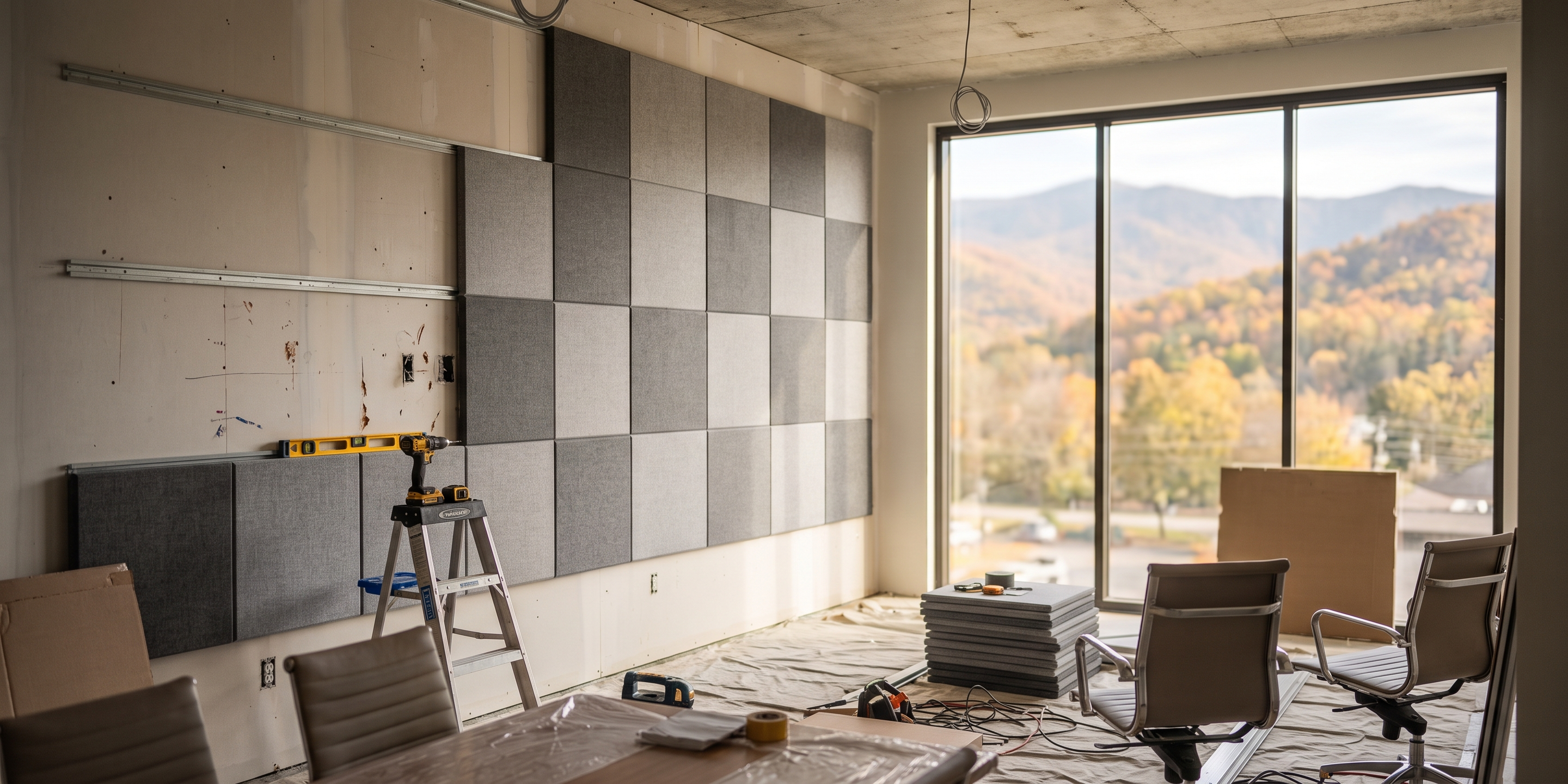
An acoustic survey uses specialized, lab-grade instruments to measure the physical properties of a room itself: reverberation time (RT60), sound transmission through walls (STC), how much a ceiling or panel absorbs (NRC), and how far speech stays intelligible before it fades into background noise.
It's typically run once, ahead of a renovation, a new lease, or a WELL submission, meant to confirm that a space's acoustic performance matches its design intent before occupants ever move in.
These assessments are typically done with the room unoccupied, since furniture, people, and everyday activity all change how a space actually sounds. That level of physical detail, exactly how a room reflects, absorbs, and transmits sound, takes specialized equipment and training to measure accurately, which is why it's typically left to a professional acoustician rather than attempted with a general-purpose reading.
What Does Continuous Sound Monitoring Show That a Single Reading Can't?
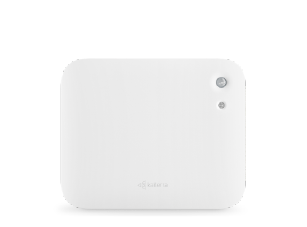
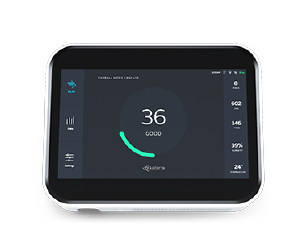
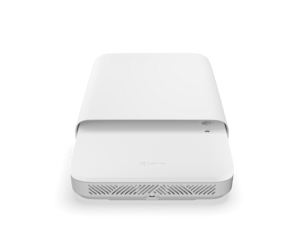
Continuous sound monitoring uses a wall-mounted sensor to track sound level, variability, and frequency around the clock. Unlike a one-time test, continuous monitoring surfaces patterns in how a room performs acoustically, especially as occupancy, utilization, and equipment or furnishings change over time.
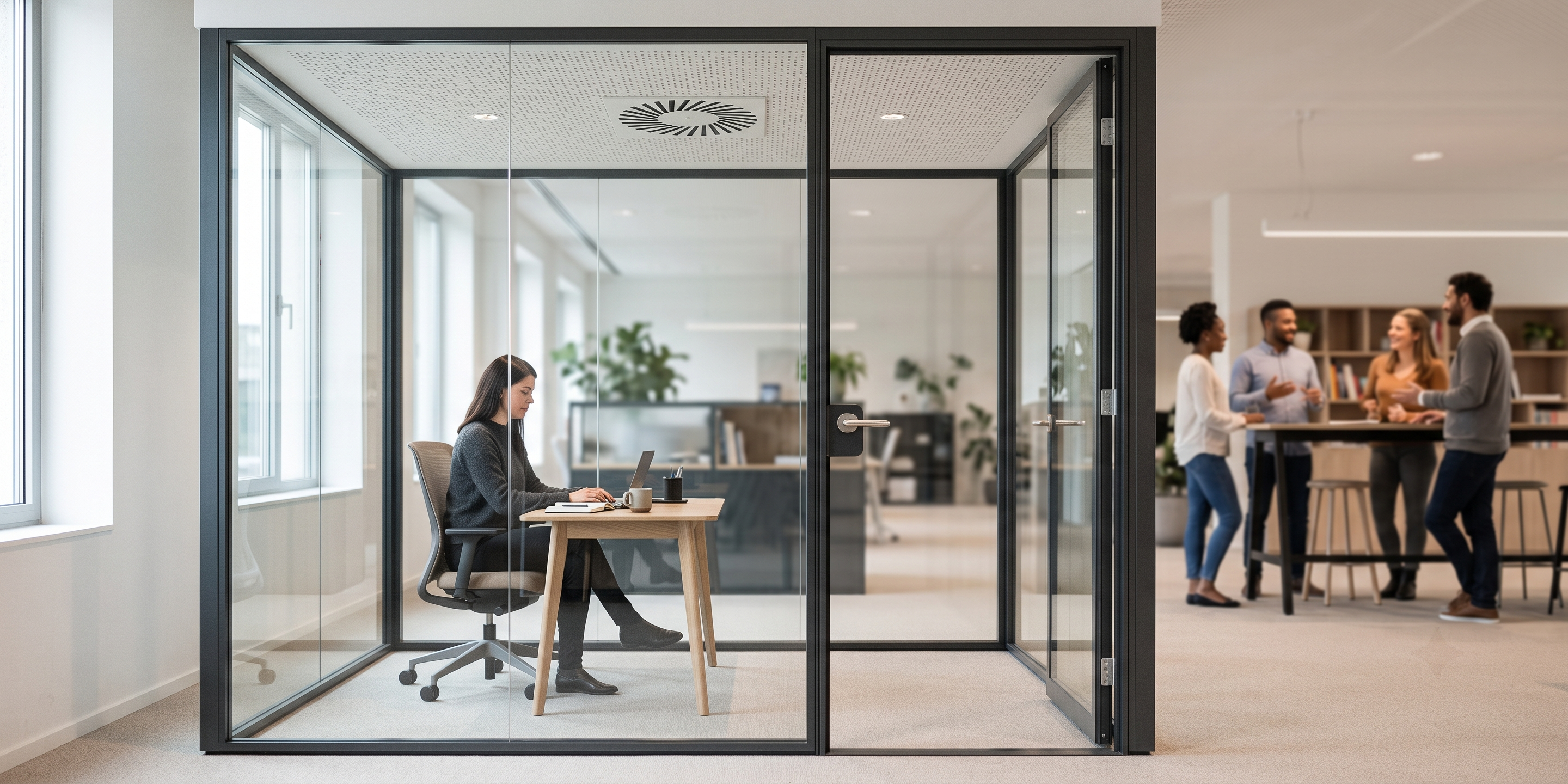
What that pattern reveals is whether a space is actually holding the acoustic character it's meant to have. A busy cafe is supposed to run loud but steady, while a library is supposed to stay quiet and consistent. Both types of acoustic environments support focus and productivity for different types of people doing different types of work.
That’s why modern offices increasingly borrow from both, designing distinct zones like quiet focus areas and louder collaboration spaces on the same floor. The goal, then, for workplace sound isn't hitting one target decibel number but holding the right profile for each zone.
Continuous data shows whether a room is holding that profile over a real workday, or swinging unpredictably, running quieter or louder than intended, or carrying a persistent high-pitched or tonal sound that a one-time reading would only catch by chance.
That's also what makes the data actionable. It can confirm whether a space actually supports the comfort, focus, and productivity of the people using it, and it can point to a specific issue (too much variability, background noise running too quiet, an intermittent high-pitched sound) instead of just a vague complaint. From there, a facilities team can try a fix and check the data again afterward to confirm it actually worked, instead of guessing.
How Do the 5 Methods for Measuring Office Noise Compare?
|
Method |
What It Captures |
Point-in-Time or Ongoing |
Best For |
|
Smartphone app |
Rough dBA estimate, accuracy varies by app |
Point-in-time |
Quick gut check |
|
Handheld sound level meter |
Calibrated dBA/dBC reading |
Point-in-time |
Spot compliance check |
|
Employee perception survey |
Self-reported satisfaction |
Periodic snapshot |
Locating problem areas |
|
Acoustic survey |
RT60, STC, NRC, distraction distance, at lab-grade precision |
Point-in-time |
Pre-occupancy evaluation, renovation, certification submission |
|
Continuous sound monitoring |
Sound level, variability, and frequency over time |
Ongoing |
Tracking and optimizing sound to achieve acoustic comfort day-to-day |
Which Method Should You Actually Use?
For most facilities and workplace teams, acoustic surveys and continuous monitoring are the strongest starting point, doing the heaviest lifting of the five: one characterizes what a room is physically capable of, while the other tracks how it actually performs once people are using it.
An employee perception survey is a valuable next layer, serving as an on-the-ground check that confirms the data lines up with how people actually experience the space. A smartphone app or handheld meter is fine for a quick check, but isn't built to support a serious acoustic strategy on its own.
You can't fix what you don't measure, and treating a noise complaint with acoustic panels, partitions, masking systems, or a new furniture layout before knowing what's actually driving it is a guess dressed up as a solution.
That's why you have to take a measure-first approach: start with what the data shows, then match the specific intervention to the real pattern, not just the loudest complaint in the room.
Start Measuring Noise in Your Office
At Kaiterra, we believe that continuous monitoring is the key that unlocks the insights required to optimize your indoor environment, and sound is a core component of that environment, alongside indoor air quality and thermal comfort.
To learn more about how continuous sound monitoring can improve your indoor environmental quality (IEQ), and create a space where your team thrives, reach out to our team today.