





For fifty years, the algorithm for prosperity was simple: Input education and data; output value. We called it the Knowledge Economy. The credential was the currency, and the bottleneck was access to information.
But in the blink of an eye - specifically, since the public release of LLMs - that currency has been debased. Generative AI has commoditized knowledge work. It passes the bar exam, diagnoses cancer from scans, and writes code better than junior developers.
In fact, McKinsey & Company estimates AI will automate up to 70% of the work that currently occupies your employees’ time, specifically data synthesis and low-level analytics.
If AI is making "knowledge" cheap, then where does the value go? It migrates to the bottleneck.
Welcome to the Brain Economy
In 2026, the bottleneck isn’t information. It is processing power - specifically, biological processing power.
The value now lies in the ability to synthesize, strategize, and make what Jeff Bezos calls "Type 1" decisions: irreversible, high-stakes choices that require judgment, not just calculation. "Type 2" decisions - lower stakes, everyday choices - will very soon be dominated by AI.
We are witnessing the transition from the Knowledge Economy to the Brain Economy. In this new era, your organization’s most critical asset is no longer its IP or its brand; it is the collective neurological health of your workforce. We call this brain capital.
This isn’t just a theory; it is a major geopolitical priority. In late 2025, the Canadian Brain Economy Declaration formally urged G7 leaders to treat brain capital as an essential economic asset. This declaration signals a global shift: national competitiveness and business success will soon be measured by the cognitive resilience of the workforce.
What Is Brain Capital?
To succeed in this new economy, we have to first understand this new asset class. Brain capital is a measurable economic asset that combines two distinct but inseparable domains: brain health and brain skills. Here’s the difference:
- Brain Health: The biological preservation of the brain. This includes the absence of mental health disorders (such as depression, anxiety, and burnout) and the presence of positive neuroplasticity and metabolic fitness - markers of a healthy, well-functioning brain structure.
- Brain Skills: The executive functions required to operate in an automated economy. As AI commoditizes routine tasks, the premium on uniquely human skills - complex problem-solving, emotional intelligence, and adaptability - has skyrocketed.
Think of brain capital as critical infrastructure, like digital networks or energy grids. Like any infrastructure, it requires consistent maintenance to function optimally; without it, the asset inevitably depreciates.
The Trillion Dollar Cost of "Brain-Negative" Workplaces
Most legacy business models are "brain-negative," meaning they extract value in ways that actively deplete cognitive resources - through chronic stress, burnout, and toxic indoor environments. These business models are essentially paying for a high-performance engine (their talent), but running it on low-grade fuel.
The cost of this depreciation is massive. But the good news is that the economic opportunity from improving this asset is even larger:
- The Cost of Inaction: Impaired brain health costs the global economy up to $8.5 trillion annually in lost productivity. This figure captures both absenteeism and presenteeism, where employees are physically present but cognitively impaired.
- The Opportunity: The McKinsey Health Institute estimates a $26 trillion global economic opportunity from proactively addressing brain health. Within that total, the workplace alone could generate close to $12 trillion in value from holistic health investments.
- The Demographic Imperative: With populations aging rapidly, retaining the crystallized intelligence of older workers is key to maintaining economic growth. Prioritizing the participation of older adults in the workforce could increase GDP by up to 7.2%.
The Invisible Performance Killer
Knowing you need to improve brain health is step one. But the fix goes deeper than better benefits or mindfulness apps. Employers may have no control over their employees' sleep quality or nutrition, but what they can control is one factor that can make or break their brain capital: the physical environment.
The most significant physiological drag on your company’s cognitive horsepower is often invisible: your indoor air quality (IAQ).
If your office is one of millions with “stagnant air,” you’re not just creating a poor occupant experience. You’re forcing your employees to inhale pollutants that sabotage their brain health - and, by extension, your company’s overall brain capital. Here’s how:
- Carbon Dioxide (CO2): In crowded meeting rooms, CO2 levels often spike above 1,000 ppm. This causes cerebral vasodilation (widening of blood vessels in the brain), which reduces neural activity and impairs decision-making.
- Particulate Matter (PM2.5): Fine dust penetrates the blood-brain barrier, triggering neuroinflammation. This is linked to reduced cognitive speed in the short term and neurodegenerative concerns in the long term.
- Volatile Organic Compounds (VOCs): Off-gassing from furniture and cleaning supplies triggers physiological responses like fatigue and headaches, which reduce the focus required for complex problem-solving.
The Proof Is in the Productivity
We aren't just guessing that better air leads to better work. The business case is backed by rigorous data from the Harvard T.H. Chan School of Public Health’s COGfx studies. These studies quantified the impact of "Green+" building conditions on high-value employee skills (those that support Type 1 decisions):
- Crisis Response: +97% to +131% (Critical for high-pressure decision-making)
- Strategy: +288% (Essential for long-term planning)
- Information Usage: +299% (Vital for processing complex data streams)
If a SaaS tool promised to increase your strategy team’s output by 288%, it would be an immediate investment - no approval needed. But because this optimization comes from your HVAC system, and not a more visible or tangible strategy, it is often overlooked.
4 Steps to Create a "Brain-Positive" Workplace
Optimizing your brain capital requires moving from vague wellness goals to systematic, data-driven optimization. Here are four steps to help you get started:
1. Know Where You Stand
Start by auditing your organization against existing frameworks. The HERO Health and Well-being Best Practices Scorecard is a free benchmarking tool developed by HERO and Mercer and is widely adopted by thousands of leading companies, including Mayo Clinic and Prudential.
The goal is to see where you stand in terms of health and well-being and identify ways to improve organizational health by setting measurable goals.
2. Reduce the Sensory Load
The brain processes 11 million bits of sensory information every second. If a workplace is visually chaotic or acoustically jarring, employees burn cognitive fuel simply filtering out distractions.
- Acoustics: Implement zoning and sound-dampening materials to reduce noise, a primary driver of cortisol spikes.
- Circadian Lighting: Install lighting systems that mimic natural daylight progression to support sleep-wake cycles and daytime cognition.
3. Get a Building Certification
Third-party certifications provide validation for high-performance environments.
- WELL Building Standard: Focuses exclusively on human health and mental well-being.
- LEED v5: Rewards strategies that improve ventilation and reduce toxins.
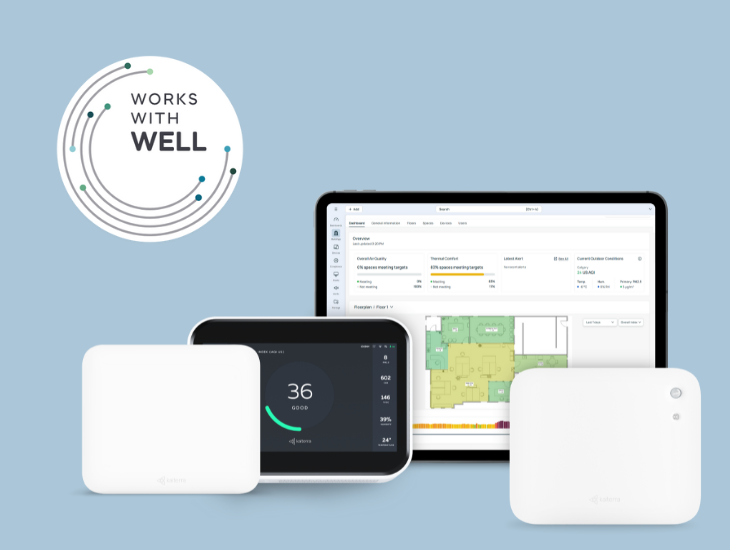
- RESET Air: A performance-based standard requiring continuous monitoring and transparency.
4. Monitor and Optimize IAQ
Building a brain-positive workplace requires continuous data to verify performance. Mechanical upgrades (like MERV 13+ filters) are the baseline. The strategic differentiator is real-time intelligence.
- Deploy Commercial Air Quality Monitors: Look for solutions that continuously measure at least CO2, particulate matter, TVOC, temperature, and humidity - ideally also NO2, CO, and ozone.
- Integrate and Automate: Connect this data to your building management system (BMS), so ventilation increases automatically when sensors detect a spike, like a CO2 build-up during a meeting.
- Visualize and Share Data: Displaying air quality data builds trust with employees and stakeholders, improves ESG reporting, and gives your company a competitive edge for recruitment.
Leading in the Brain Economy
The organizations that thrive in 2026 and beyond will be those that view their buildings not simply as containers for people, but as performance-enhancing infrastructure. By investing in indoor air quality optimization, you are securing the biological hardware that drives your business.
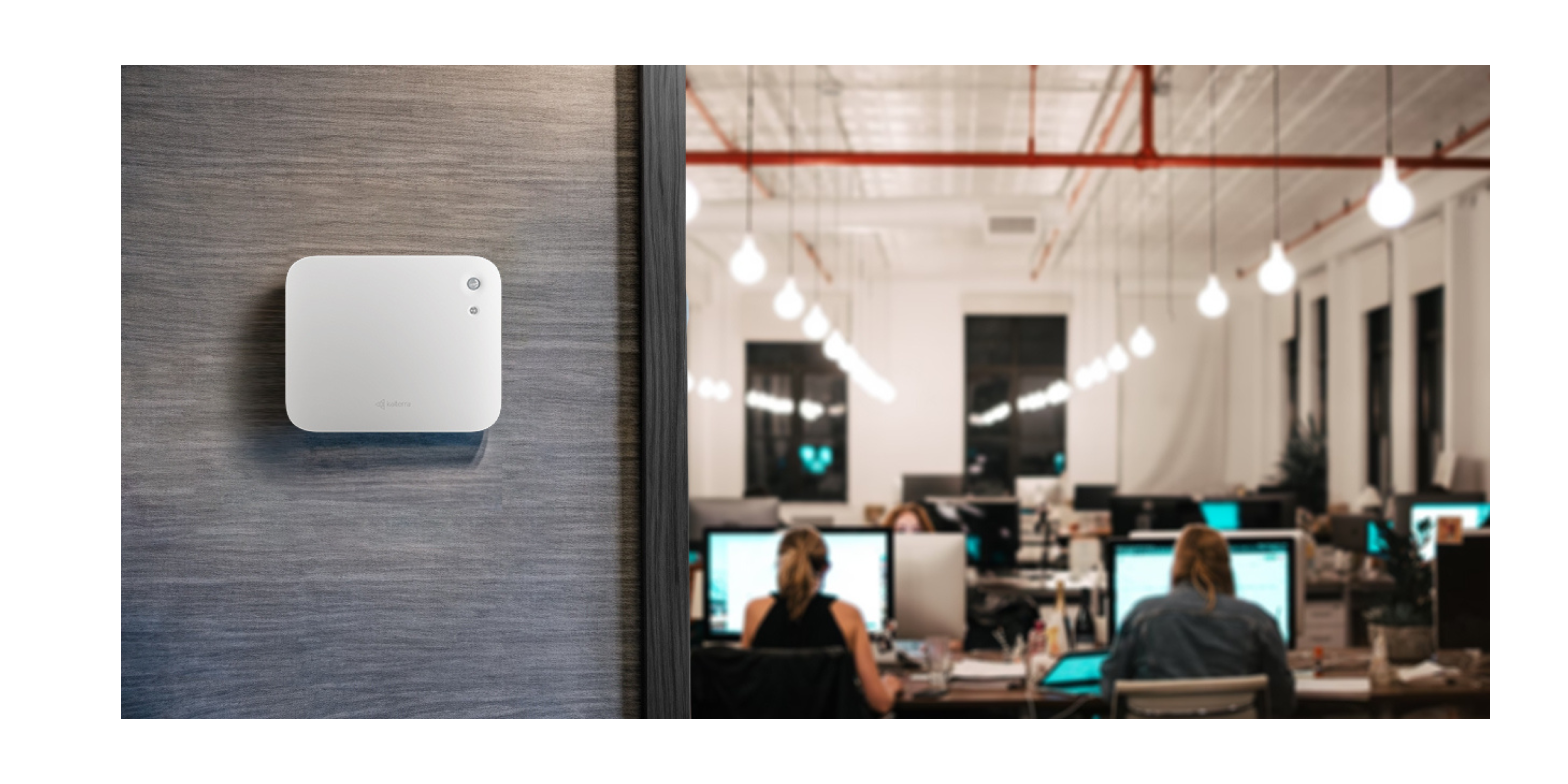
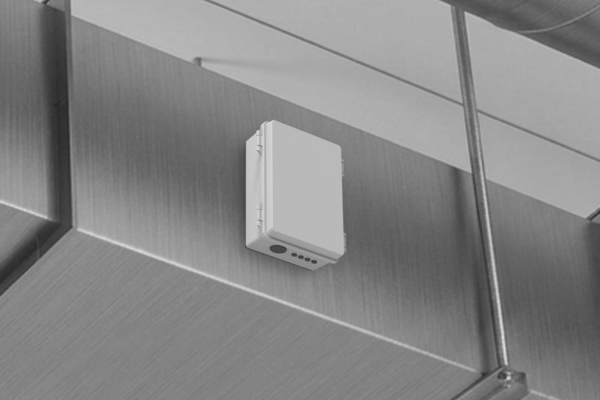
At Kaiterra, we provide enterprise air quality monitoring solutions that measure the parameters essential for a high-performance environment. With an integrated data platform that automates analysis, we help you optimize your building for brain health and, by extension, better business outcomes.
In the Brain Economy, clean air is no longer a luxury. It is a competitive advantage. Reach out to our team today to learn how to future-proof your workforce.