







Newsletter
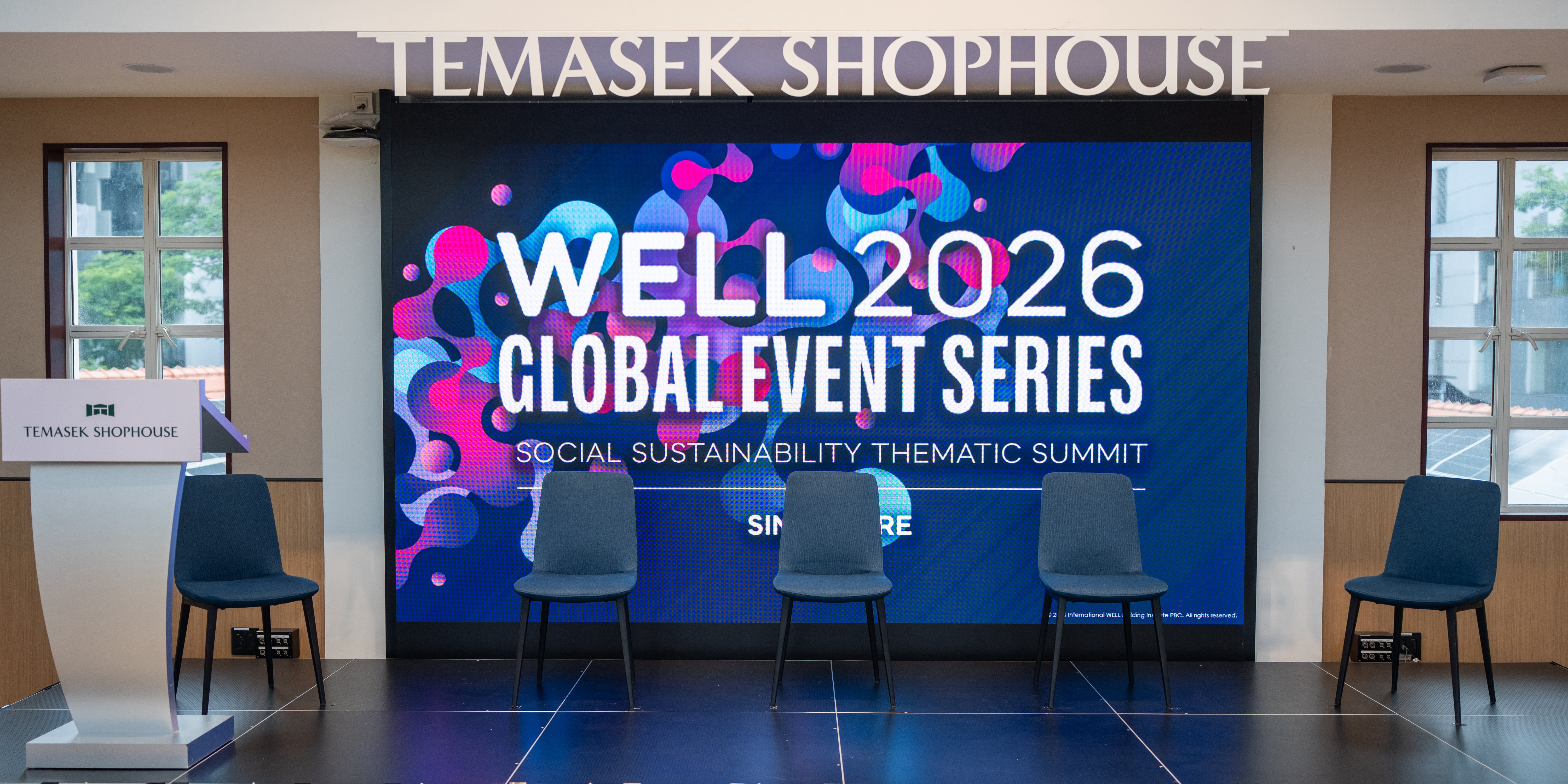
A smart building acts on its data and checks the results, while an automated one simply collects it. That distinction was at the center of the WELL 2026 Social Sustainability Thematic Summit in Singapore, which brought design leaders, sustainability practitioners, and building operators together around one central question: How do we make buildings genuinely deliver on the promise of smart, healthy, and inclusive workplaces, and not just claim to?
A panel with Tamagin Blake-Smith (M Moser Associates) and Angela Spathonis (Gensler Singapore) broke down the specific hurdles standing in the way of smart, high-performing workplaces, each one building on the last: what makes a building smart, what makes that achievable, and how you prove it's working.
1. What Makes a Building Smart vs. Automated?
The difference comes down to what happens after the data is collected: a smart building turns it into action and checks whether that action worked, while an automated building stops at the dashboard.
Building management systems are not new. Neither is cloud computing. The hard question Blake-Smith put to the room was how to draw the line between automated and smart:
"If the data is not put into action and if it's not measured, it's not smart. It's automated."
-- Tamagin Blake-Smith, Director of Engineering, Technology & Sustainability at M Moser Associates
That distinction matters because most buildings sold as "smart" are really just automated. Sensors are deployed, data is collected, and dashboards exist, but nothing changes downstream. No one is acting on what the data is saying, and no one is measuring whether those actions improved the experience for the people in the space.
A platform that tells you the CO2 in a meeting room hit 1,400 ppm is automation. A workflow where that reading triggers a ventilation response, that response is verified, and the occupant experience is measurably better - that's smart.
2. What Is Required to Make Building Technology Frictionless?
Building technology only becomes frictionless when the people who will eventually own the data are in the room before a single system gets specced, not after the building opens. Getting from automated to smart isn't a technology problem. It's a people problem. Spathonis pointed out that the bigger problem with building technology investment is that it often sits idle:
"Companies do spend a lot on the technology, the AV, the IT, but when it doesn't work, [it] just sits there as a white elephant."
-- Angela Spathonis, Managing Director at Gensler Singapore
Blake-Smith's diagnosis was that ownership is the root cause:
- IT funds a sensor pilot that the real estate team didn't ask for.
- HR cares about hybrid work outcomes that the technology team didn't design for.
- No one is sure who owns the data once it's collected.
The fix is procedural, not technical: bring HR, IT, real estate, and sustainability to the table in the pre-design phase, not after the building is built. The asset has to support the experience, that experience has to support the business, and the technology is the enabler that connects them. Or, as Blake-Smith put it, technology is "an enabler. Not the lead."
3. How Is the Role of Post-Occupancy Data Changing?
Post-occupancy data used to mean a one-time evaluation after move-in; now it means continuous monitoring for the life of the building. That shift is changing what counts as proof, too. Five years ago, the standard request was a three- or six-month post-occupancy evaluation: surveys, workshops, and a binder. That demand is declining.
What's replacing it is a request for ongoing stewardship: help us manage the data this building is producing every day. Blake-Smith described this as a fundamental shift in the lifecycle of a project:
"In the past, we used to finish the project, take the beautiful photo, publish the article. And now that's changing. The lifecycle of a project is becoming bigger in the operation phase."
-- Tamagin Blake-Smith, Director of Engineering, Technology & Sustainability at M Moser Associates
Spathonis added that the data available now is qualitatively different from what manual post-occupancy evaluation produced. It’s richer, continuous, and more transparent about whether a building is doing what it was designed to do.
For indoor air quality (IAQ) specifically, this is the shift from "we audited the building once and it passed" to "we are continuously verifying that the air people are breathing today meets the standard." That continuous evidence is what makes IAQ data legible to ESG reporting, sustainable finance, and tenant retention conversations, none of which a one-off survey can support.
What Does This Mean for Building Owners and Operators?
For building owners and operators, this means the next phase of healthy building work isn't about specifying the right hardware. It's about closing the loop between data, action, and verified outcomes.
Buildings that can prove what they're doing for the people inside them are the ones that will hold their value, retain their tenants, and align with the social sustainability frameworks now being written into regulation and investment decisions.
The bar has moved. "Smart" is no longer something you install. It's something you can measure, adjust, prove, and repeat.
Curious to know how IAQ monitoring drives smart building performance? Read this article next to learn how IAQ sensors feed into building automation systems to power demand-controlled ventilation, cut energy costs, and boost occupant health.


