





Workplace noise does more than distract you from your work. Sustained exposure to noise raises stress hormones, lowers sleep quality, disrupts focus, and has been linked to a higher risk of cardiovascular disease. This post looks at what the research actually shows about noise and health, why it belongs in the same conversation as air quality and thermal comfort, and how measuring it is the first step to managing it.
How Does Workplace Noise Affect Employee Health and Well-Being?
Workplace noise affects health and well-being through several distinct, well-documented pathways, from acute stress response to long-term cardiovascular strain. The Environmental Noise Guidelines for the European Region, published by the World Health Organization (WHO), treat chronic noise exposure as a genuine public health issue with measurable disease burden, not just a hearing-damage risk. Here's what the research says about how noise can affect your health:
1. Stress and Cortisol
Workplace noise raises cortisol, the body's primary stress hormone, and it does so in proportion to how loud and how long the exposure lasts. A field study on industrial night-shift workers found that as both sound pressure levels and exposure increased, so did serum cortisol concentration.
Noise acts as a non-specific stressor. It activates the hypothalamic-pituitary-adrenal (HPA) axis, which regulates the body's stress response by controlling cortisol release. A systematic review of 13 studies evaluating occupational noise and cortisol found that most, 10 of the 13, reported a significant association between higher workplace noise and higher cortisol.
2. Sleep Quality
The stress response triggered by loud and/or persistent noise doesn't switch off the moment you leave the office. Research on the relationship between cortisol and sleep shows that the HPA axis and sleep regulate each other in both directions. Elevated evening cortisol is associated with shorter, more fragmented sleep, and poor sleep in turn keeps the same stress axis more active the next day.
A workday spent in an acoustically stressful environment can carry that stress response home, keeping cortisol elevated into the evening and making it harder to wind down and fall into deep sleep.
A WHO-commissioned systematic review on noise and sleep pooled 74 studies and found that the number and acoustic properties of individual noise events, not average levels, are what actually predict sleep disturbance. Each 10 dBA increase in the loudest moment of a single event raised the odds of waking up by 36%.
3. Cardiovascular Risk
Chronic noise exposure raises cardiovascular risk by keeping the body's stress response switched on longer than it should be. A systematic review from the WHO points to sustained stress activation as the leading mechanism behind this. It connects chronic noise exposure to elevated blood pressure and increased cardiovascular risk over time.
None of this requires noise loud enough to damage hearing. Levels well within what a typical office would consider acceptable can still keep this stress response active if the space is inconsistent or unpredictable throughout the day.
4. Concentration and Mental Fatigue
Noise forces the brain to spend effort filtering out irrelevant sound, and the process of filtering itself is tiring. Research on noise and cognitive processes has tied momentary noise exposure to measurable drops in cognitive performance. It also links noise exposure to rising mental fatigue over the course of a task.
That mental cost accumulates over a full workday, even when the noise itself never rises to a level anyone would call disruptive. Add it up across enough hours, and the toll of office noise on productivity becomes hard to ignore.
5. Annoyance and Overall Well-Being
Annoyance itself is a recognized health outcome, not just a subjective complaint. The WHO’s burden-of-disease assessment for environmental noise estimates that over one million healthy life-years are lost every year to traffic noise in Western Europe, with one in three people annoyed during the day and one in five sleep-disturbed at night. Sustained annoyance keeps the same stress pathways engaged, contributing to the same cumulative toll on stress, sleep, and cardiovascular health.
6. Mental Health
Chronic noise exposure also takes a toll on mental health over the long term. Research tracking noise exposure and mental health outcomes found that every 10 dB(A) increase in noise exposure was associated with 12% higher odds of anxiety and 4% higher odds of depression.
That risk compounds over time. In a five-year prospective study of over 11,000 people, those who reported being annoyed by noise at the start of the study were significantly more likely to have developed depression (13% more likely) or anxiety (11% more likely) by the five-year follow-up.
Both studies measured community noise, traffic, aircraft, rail, industrial, and neighborhood sources, rather than office noise specifically. The mechanism they point to is the same one already at work in the stress and sleep pathways above: sustained noise exposure activates the body's stress response, and that has consequences for mental health as well as physical health.
How Does Noise Fit Into the Bigger Picture of Employee Well-Being?
Sound is one input into indoor environmental quality (IEQ), alongside indoor air quality, temperature, and humidity. Employees don't experience these factors separately. A room can have clean air and a comfortable temperature and still feel stressful if the acoustic environment is inconsistent.
WELL v2 treats sound as one of ten core concepts shaping occupant health, alongside air, thermal comfort, and light, which reflects how workplace experience teams are increasingly expected to manage IEQ as a connected system rather than a single metric.
What Can Employers Do to Reduce Noise-Related Health Risks?
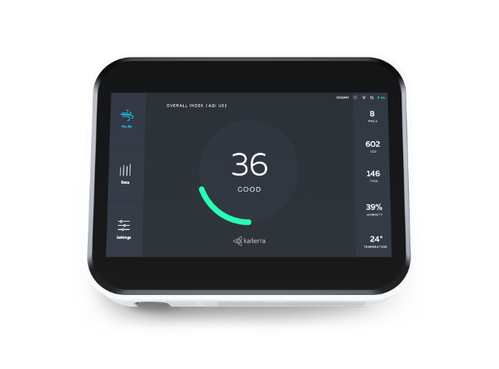
You can't manage a risk you haven't measured. Employers looking to reduce noise-related stress should start with a baseline, not a guess:
- Measure actual sound levels across the workday, not a single spot check, since stress responses are tied to how noise varies over time, not just its average.
- Compare those levels against a reputable standard, such as the WELL v2 Sound concept or ASHRAE's background noise criteria for different space types.
- Identify which zones (open desks, phone booths, meeting rooms) are highest risk for noise exposure and prioritize those first.
- Continuously monitor sound levels after any change (furniture, layout, sound masking) to confirm the fix actually worked, rather than assuming it did.
Learn More About How Acoustic Comfort Can Improve Your Employees' Health and Well-Being
The research is clear: chronic workplace noise affects stress, sleep, cardiovascular health, concentration, and overall well-being through interlocking, well-documented pathways. Continuous monitoring is what turns a complaint saying, "The office feels loud," into something a facilities or workplace team can actually act on.
Learn more about how to optimize acoustic comfort to support your team's health and well-being - reach out to our team today!