


.png?width=200&height=148&name=Menu%20C%20(2).png)
.png?width=307&height=228&name=Menu%20-%20D%20(1).png)





.png)



As air quality awareness continues to grow, driven by new research and increasing environmental stress events like wildfires, the global focus on indoor air quality (IAQ) is higher than ever. We spend 90% of our time indoors, making the air we breathe in the built environment more impactful than the quality of the air outside.
Why does IAQ matter in 2026?
- Health: Poor air quality is directly linked to respiratory issues and reduced cognitive function.
- Business: Suboptimal ventilation costs the U.S. economy an estimated $22.8 billion annually in lost productivity due to sick leave.
- Prevention: With wildfire smoke exposure predicted to increase by 51% in the coming decades, robust monitoring is a defensive necessity.
If you are exploring ways to enhance your workplace experience, this guide covers the "why," "what," and "how" of IAQ monitoring for 2026.
2026's Air Quality Monitoring Guide
1. Why should you invest in indoor air quality monitoring?
2. Three types of air quality monitoring
3. Key air quality parameters to measure
4. How to choose an air quality monitor
Why Should You Invest in Indoor Air Quality Monitoring?
The short answer: It pays for itself. Investing in IAQ monitoring offers a proven return on investment through improved employee health, enhanced workplace performance, and higher real estate value. Not only does IAQ optimization have a strong ROI, but it’s also the right thing to do!
1. Boost Occupant Wellness and Productivity
Since we spend most of our time inside, indoor air generally makes a larger impact on our health and cognitive performance than outdoor air.
- Cognitive Function: High CO2 levels crush strategic thinking. A recent study found that employees working in 1,400 ppm CO2 score 50% lower on cognitive tests compared to those in 550 ppm environments.
- Creativity: Reducing TVOC levels has been shown to increase creative potential, with one study linking a 71.9% decrease in TVOC to an 11.5% increase in creativity.
- Absenteeism: Poor indoor air quality is a significant contributing factor for sick building syndrome. Buildings with low ventilation rates see a significant increase in sick leave.
- Retention: Improvements in air quality increase employee satisfaction with environmental conditions by 1.62 points (on a 7-point scale), boosting overall job satisfaction.
2. Significant ROI
The financial case for healthy buildings is undeniable:
- Benefit vs. Cost: Improving air quality yields an estimated productivity benefit of $6,500 per person per year, while costing less than $40 per person to implement.
- Payback Period: The estimated payback period for IAQ improvements is just two years.
3. Reduce Operating Costs
Data allows you to run your building intelligently rather than blindly.
- Demand-Controlled Ventilation (DCV): Instead of running HVAC at full blast, use real-time CO2 data to modulate ventilation based on actual occupancy. This saves significant energy when spaces are empty.
- Targeted Maintenance: If particulate matter spikes in one specific zone, you can pinpoint the exact filter or air handler that needs repair, avoiding unnecessary building-wide maintenance.
4. Earn Building Certifications
Monitoring is a cornerstone of green and healthy building standards like WELL, LEED, and RESET. Continuous monitoring helps you earn points toward certification and acts as quality assurance for tenants.
- WELL v2: Using continuous monitors that measure all of the parameters required by WELL can secure up to 9 points across the Air and Thermal Comfort concepts.
- LEED v5 O+M: Installing continuous air quality monitors that measure PM2.5, CO2, and TVOC can earn all 10 points in the Indoor Air Quality Performance credit. This is double the points you can earn from spot-testing.
- RESET Air: Unlike point-based systems, RESET is a performance-based standard where continuous monitoring is 100% mandatory. You cannot achieve RESET certification without it.
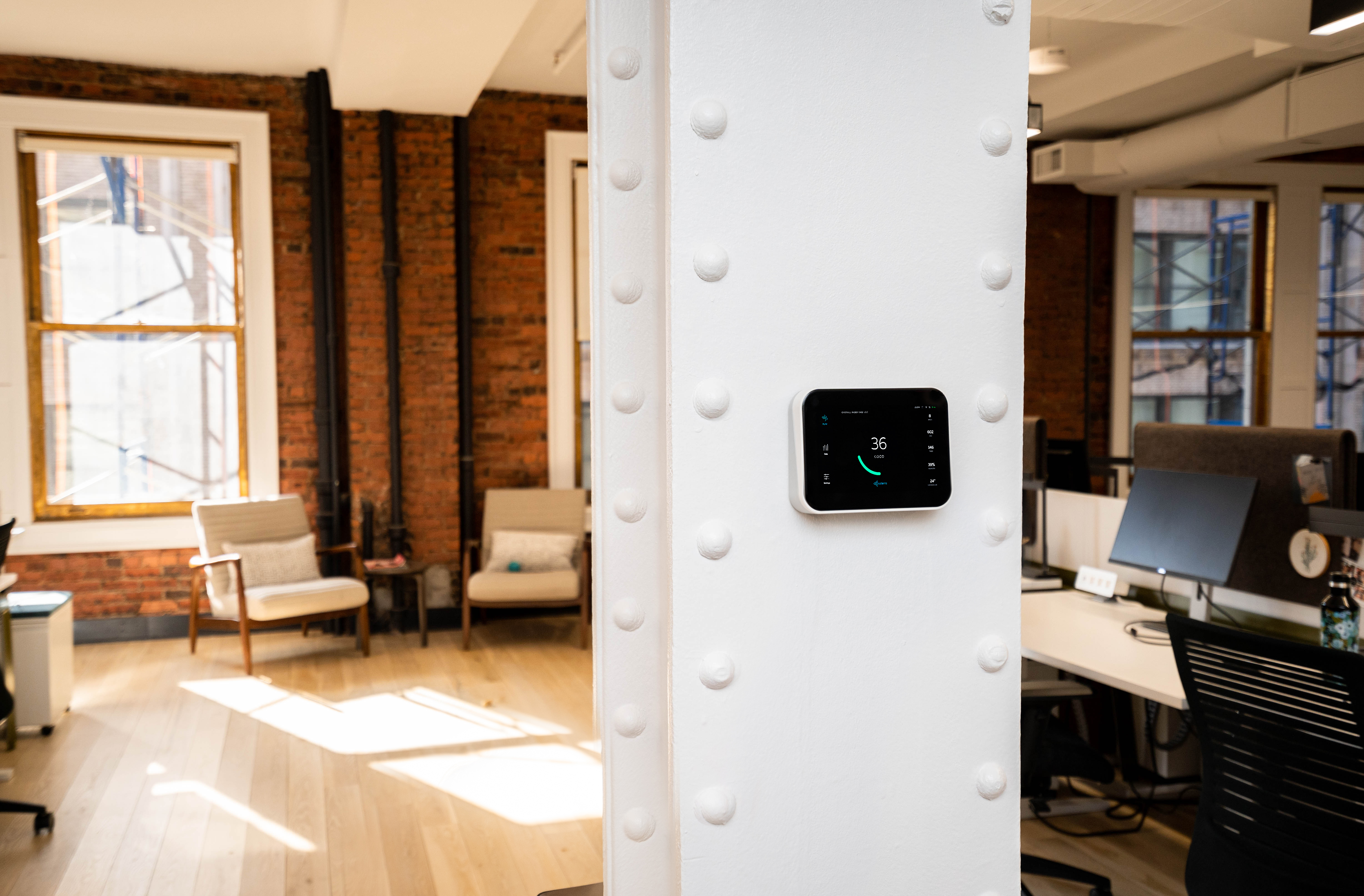
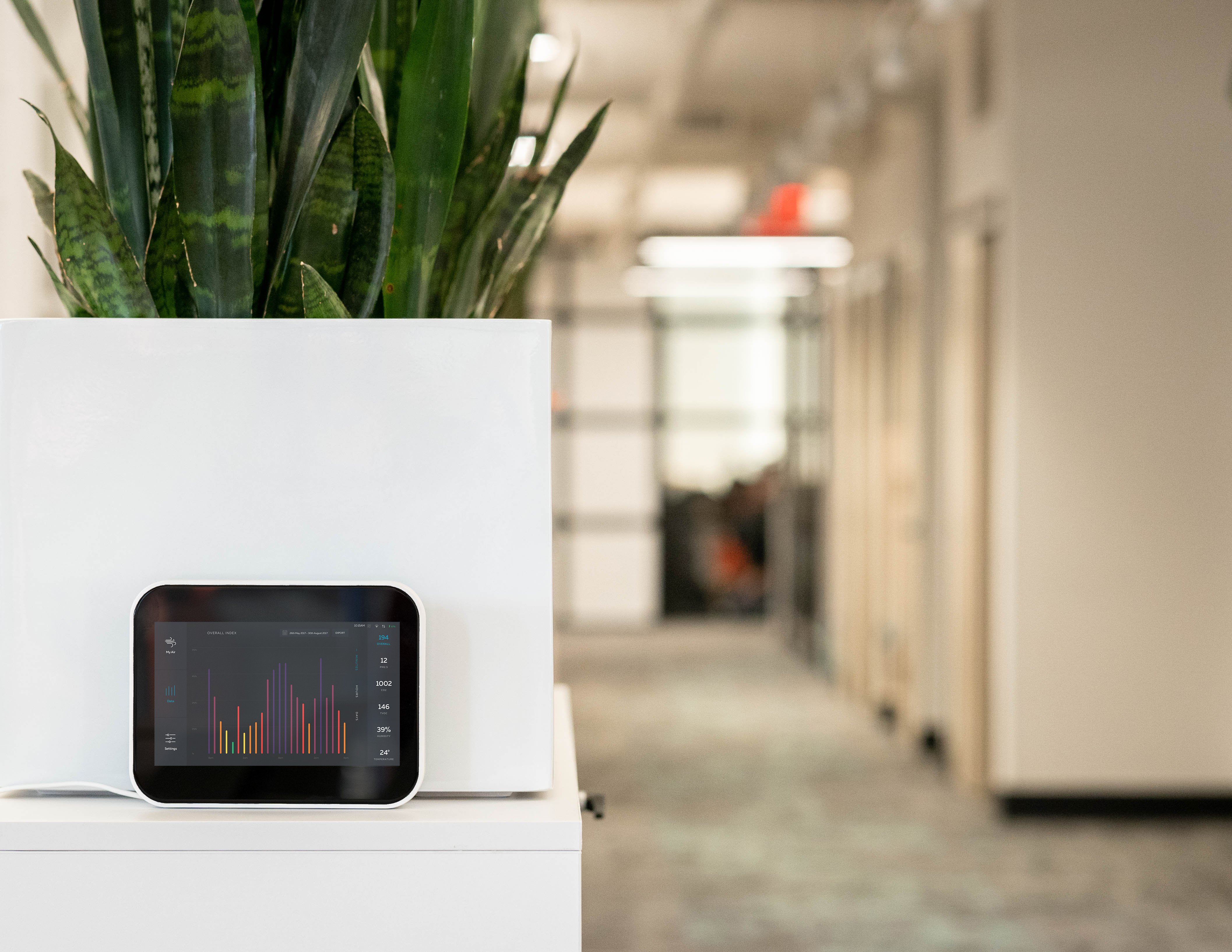
The IWBI utilized the Sensedge in its NYC headquarters to receive a WELL certification.
Types of Air Quality Monitoring
Air quality monitors generally fall into three categories: consumer, commercial, and reference-grade. For the purposes of this guide, we’re focusing on commercial-grade solutions, split into three applications:
1. Indoor Wall-Mounted Monitors
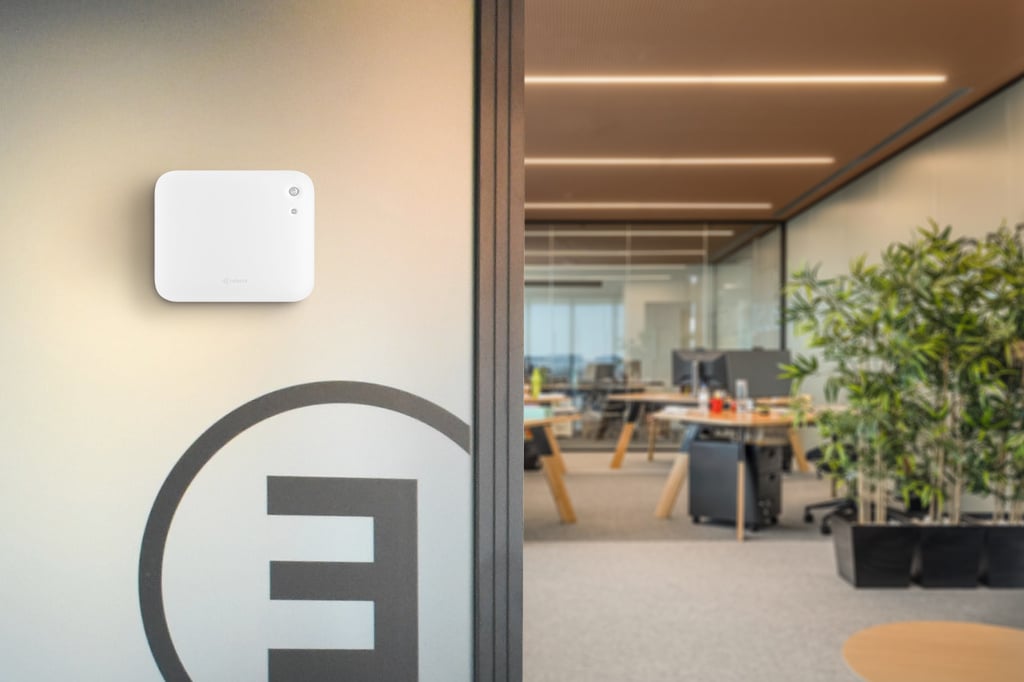
These are the most common devices, installed in the "breathing zone" (3-6 feet high) of occupied spaces like conference rooms and open offices.
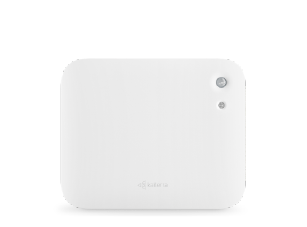
They measure the air your people are actually breathing and are essential for earning points in building certifications like WELL and LEED. You can install either wired IAQ monitors or wireless, battery-powered IAQ monitors, depending on your building specs and project goals.
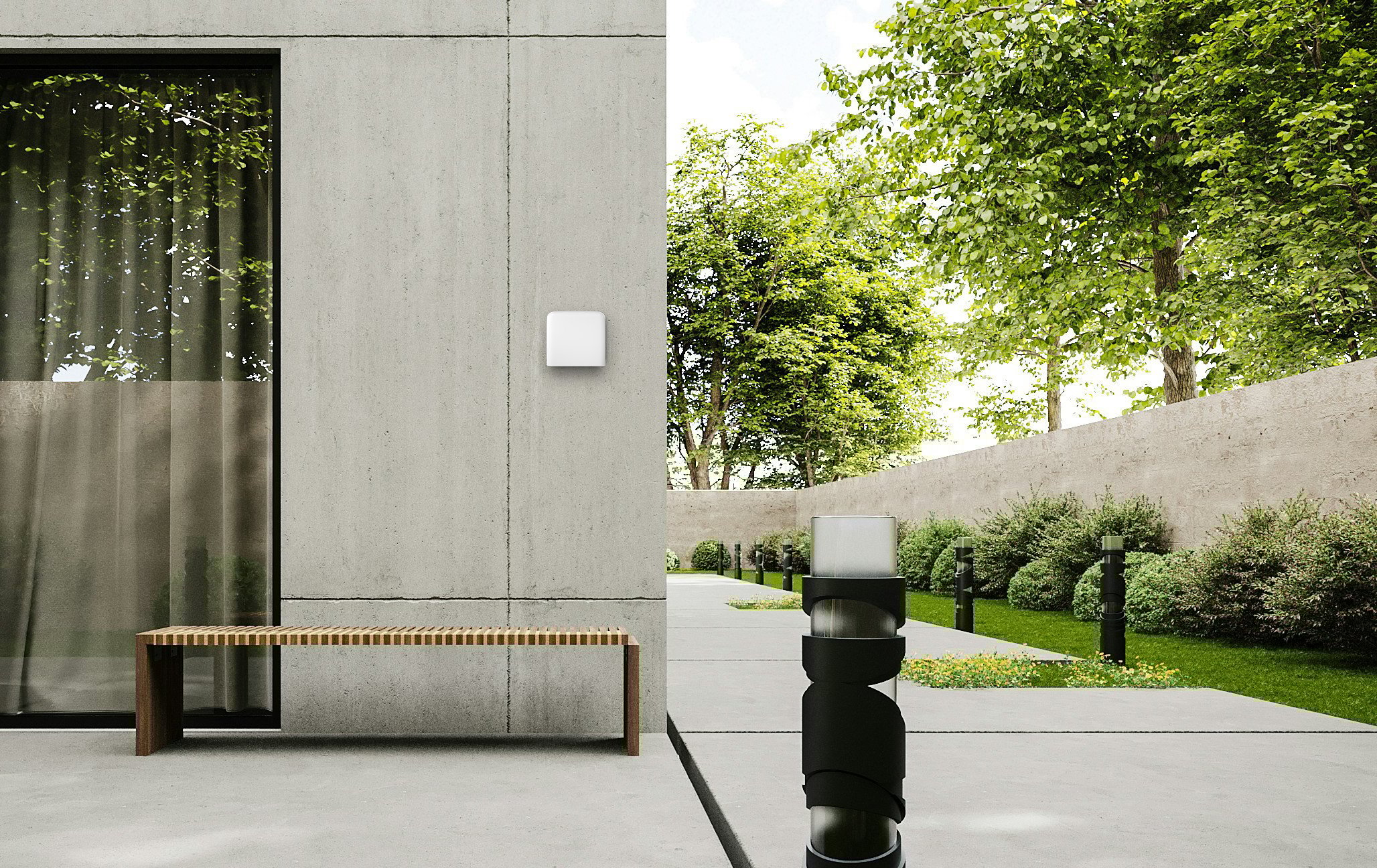
2. Outdoor Air Quality Monitoring
Outdoor monitoring is key for establishing a baseline for indoor air quality levels to verify that your HVAC system is sufficiently ventilating and filtering the outdoor air.
By installing a continuous outdoor air quality monitor (both wired outdoor air quality monitors and wireless outdoor air quality monitors available), you gain critical context for your building's overall performance.
3. In-Duct Air Quality Monitoring
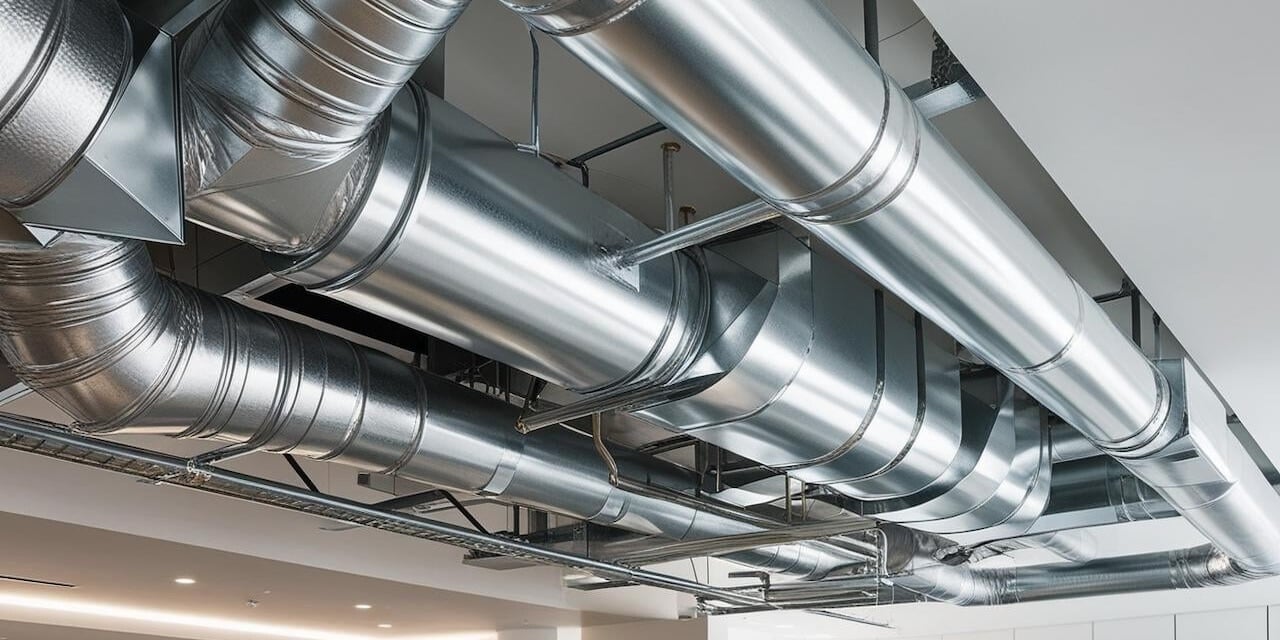
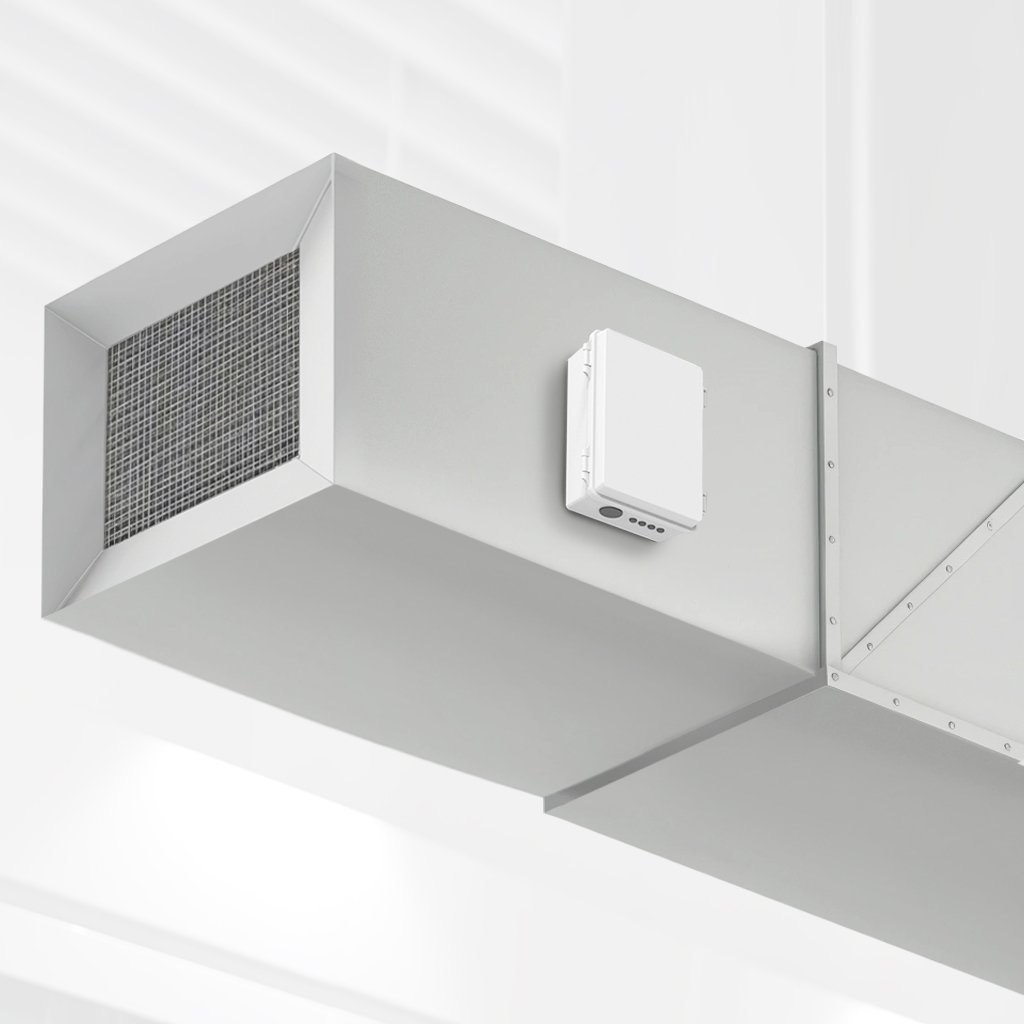
In-duct monitoring is essential for a 360º view of your building's performance. By placing specialized sensors inside the ductwork of the HVAC system, you can diagnose exactly where air quality issues come from.
- Air Intake: Measures the air entering from outside for pollutants.
- Supply Duct: Measures the quality of air being delivered to each room.
- Return Duct: Measures the air coming back from the room to understand occupant impact.
Note: You cannot simply put a standard wall monitor inside a duct. You need specialized hardware designed for airflow and hard-to-reach maintenance areas.
Key Air Quality Parameters to Measure
While project needs vary, these five parameters are the "Vital Signs" of a healthy building:
|
Parameter |
Why it Matters |
|
Particulate Matter (PM2.5) |
Microscopic dust and smoke that enters the bloodstream. Linked to long-term health risks and reduced productivity. |
|
Chemicals from cleaners and furniture that cause headaches, odors, and sick building syndrome. |
|
|
Carbon Dioxide (CO2) |
A proxy for ventilation. High levels cause fatigue, drowsiness, and reduced decision-making ability. |
|
Temperature & Humidity |
Critical for thermal comfort and preventing mold growth. |
Additional IEQ Parameters for Indoor Monitoring
Measuring other aspects of your indoor environmental quality (IEQ) can help you understand the overall occupant experience beyond air quality alone.
|
Parameter |
Why it Matters |
|
Occupancy |
Adds context to your IAQ data so you can distinguish whether poor air quality is caused by occupant behavior or a mechanical issue. |
|
Light Strength & Light Spectrum |
Provides insights into the lighting experience, which regulates circadian rhythms and is essential for occupant wellness and productivity. |
Additional IAQ Parameters for Indoor Monitoring
To gain a more comprehensive picture of your indoor air, there are three additional parameters you should monitor. Note that monitoring these parameters continuously contributes points to WELL certification.
|
Parameter |
Why it Matters |
|
Nitrogen Dioxide (NO2) |
Respiratory irritant from vehicle exhaust or gas appliances. |
|
Carbon Monoxide (CO) |
Odorless gas from incomplete combustion that reduces oxygen delivery; high levels can be fatal. |
|
Ozone (O3) |
Lung irritant generated by summer heat or office equipment. |
Additional Parameters for In-Duct Monitoring
If you’re placing sensors in the ductwork of your HVAC system, having continuous air pressure data is also valuable.
|
Parameter |
Why it Matters |
|
Air Pressure |
Measures the pressure drop across in-duct filters to understand filter performance and enable predictive maintenance. |
How To Choose an Air Quality Monitor
Choosing the right monitor isn't about finding the one with the right tech specs. It’s about matching the hardware and software to your specific project goals, preferences, and limitations.
You can read our full guide for a deep dive on how to choose the right monitor, but here we’ll provide a quick breakdown of the most important factors to consider:
1. Define Your Goals
Different goals require different tech specs and capabilities.
- For Building Certification (WELL/LEED): You need monitors that measure the right parameters and meet strict technical requirements.
- For Building Automation: You need devices that integrate seamlessly with your Building Management System (BMS) via protocols like BACnet or Modbus.
- For Occupant Health: You need a solution that measures the parameters most critical to human health and turns those readings into strategies you can take action on.
2. Assess Your Constraints
Before purchasing, consider the physical and technical limitations of your building. If you don’t have specific limitations, determine your preferences for:
- Power: Hardwired is ideal for new builds, while battery power is better for retrofit projects. Read this article to learn more about which solution is best for your project.
- Connectivity: Cellular provides an independent network with fewer IT constraints, while Wi-Fi and Ethernet connectivity allow you to integrate with the building’s existing network.
- Installation: Check for placement rules in your building, determine how you want to install monitors (screwed into the wall, peel-and-stick, etc.), and identify who will handle installation.
- Maintenance: For battery replacements and sensor calibrations, determine what is feasible for your project and screen vendors for ease and efficiency of calibration (look for modular sensors, for example).
3. Evaluate Data & Software
Hardware is only half the equation. You also need software that matches the scope and complexity of your project. There are four levels of data analytics to choose from:
- Raw Data: Spreadsheets with data. Suitable for offline or BMS-only use, or if you already have an analytics team that is building its own dashboard.
- Basic Visualization: Simple graphs and trend lines with no interpretation. Best for projects with few devices or for identifying high-level patterns.
- Advanced Analytics: Tools to help extract insights from data, such as room-specific trends. Ideal for standard commercial projects or if you have targeted goals for your IAQ.
- Insights & Automation: Instantly surfaces trends, identifies solutions, and enables automation. Best for large-scale commercial projects or those that want to automate IAQ optimization.
The Real Cost of Air Quality Monitoring (TCO)
When budgeting for IAQ, many buyers make the mistake of looking only at the "sticker price" of the hardware. However, the total cost of ownership (TCO) over 3-5 years tells a different story. To avoid budget shock, you must factor in the "hidden" operational costs.
Installation Labor
- Wired solutions have a higher upfront cost (cutting into walls to run new cables), but near-zero maintenance costs later.
- Wireless, battery-powered solutions have a lower upfront cost, but require an ongoing budget for battery replacements and gateway maintenance.
Maintenance Costs
- Battery-powered devices will need regular battery replacements. Choose a device with long battery life (like the Sensedge Go that lasts up to 8 years) to minimize these costs.
- All sensors must be regularly calibrated (as often as every three years to meet certification requirements). There are two options:
- Option 1: Factory calibrations involve removing monitors from the wall and shipping them to the manufacturer, where a specialized technician manually calibrates the sensor. Monitors must also be uninstalled and then reinstalled.
- Option 2: Choosing a monitor with a modular sensor is lower cost, as old sensors can be hot-swapped with new sensors. You avoid shipping costs altogether, and no specialized labor is needed to calibrate sensors and reinstall the monitors.
Software & Data Fees
- Clarify the software model: Is it a one-time fee or an annual subscription? Does the subscription cover unlimited users, or is it per-seat?
- Make sure the software platform you choose allows you to access the data you need for your project.
Consultancy Costs
- Many buyers underestimate the effort required to turn air quality data into action, including:
- Data Analysis: Does the software you choose automatically surface insights (e.g., "Meeting Room B is consistently under-ventilated")? Or does it just show you a graph?
- Resource Allocation: If the software doesn't do the heavy lifting, do you have the internal man-hours to analyze spreadsheets weekly? If not, you will likely need to hire an external consultant to interpret the data for you, adding a significant recurring line item to your budget.
4 Strategic Best Practices for IAQ Success
To conclude this guide, we’ll outline a few air quality monitoring best practices to help you avoid common mistakes and get the most out of your solution. For those looking to invest in an air quality monitoring system or those looking to optimize an existing system, we recommend following the four steps below:
1. Take Care of Your Air Quality Monitors
Like any piece of scientific equipment, air quality monitors need upkeep to maintain their accuracy and reliability. Sensors naturally drift over time, so it is critical to ensure they are recalibrated or replaced on a strict schedule to maintain data integrity.
Our recommendation: Upgrade to monitors with modular, hot-swappable sensors. This technology allows you to swap old sensors for new, pre-calibrated ones in seconds, maintaining the continuous data stream required for certifications like RESET and WELL without the weeks of downtime associated with traditional factory calibration.
2. Gather Enough Data
Not all spaces are the same; a single monitor in the lobby does not represent the air quality in a crowded conference room on the 5th floor. You must carefully evaluate your project layout to avoid "averaging errors."
Our recommendation: We follow the placement and density guidelines from building certifications like WELL and LEED, which means placing monitors:
- On each floor of your building
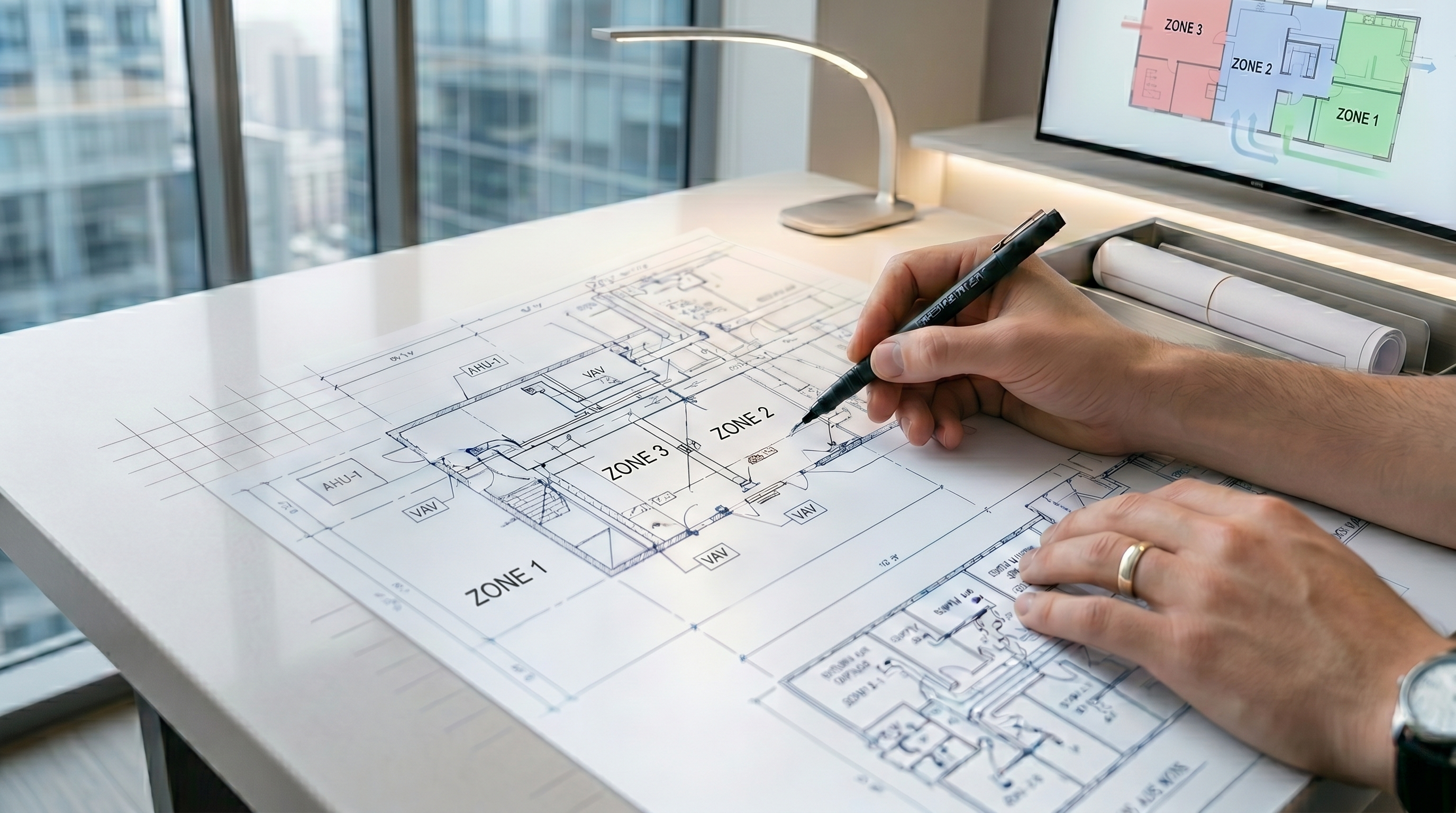
- In each HVAC zone
- In every space type
- In spaces that have higher concentrations of air pollutants
- In spaces that are occupied by vulnerable populations
This high-density approach ensures your readings reflect the true air quality of your space, catching hazardous conditions in dead zones that sparse monitoring would miss. To learn more, read this article for a full breakdown of monitor density guidelines.
3. Make the Most of Your Data
Once you have your data, don’t let it sit in a silo. To maximize the benefits of monitoring, you must transition from passive monitoring to active control to optimize your building’s performance.
Our recommendation: Integrate your air quality monitoring system directly into your building automation system (BAS). This enables strategies like DCV, where your building automatically increases fresh air when CO2 rises and minimizes it when rooms are empty, significantly reducing operating costs while improving comfort.
4. Share Your Data
Sharing your air quality data with building occupants is the fastest way to boost confidence and build trust between building management and tenants. In the modern workplace, transparency is no longer optional. It is an expectation. A recent study on workplace performance found that 74% of employees feel anxious when they enter spaces with poor IAQ.
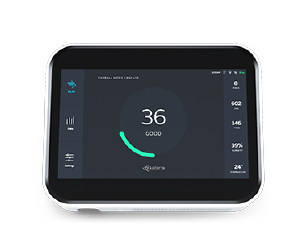
Our recommendation: Democratize your data by displaying live air quality scores on physical screens in lobbies or through tenant experience apps. This transparency reassures occupants that their environment is safe and directly supports employee retention.
Interested in Starting an IAQ Project?
At Kaiterra, we provide enterprise-grade air quality monitoring solutions designed to help you create a healthy indoor environment, earn building certifications, and protect the health and well-being of your people. Contact our team today to discuss your IAQ strategy!